AI Engineering
From FAQ Chatbot to AI Booking Agent: When RAG Starts Creating Real Value
A product-design perspective on using RAG to build understanding, then connecting it to a booking workflow with clear boundaries and user control.
By Nguyễn Sinh Nhật9 min read
Most FAQ chatbots are judged by a narrow question: did the system retrieve the right information and produce a correct answer? In a real product, however, users rarely want knowledge alone. They ask about a service, a price, or availability because they are considering what to do next.
While working on FAQ and booking flows for a dental product, I found that the important step was not making RAG increasingly elaborate. It was giving RAG the right role: build understanding and confidence, then let a controlled workflow turn intent into an outcome.
This article presents that product and architecture idea. It is not an implementation recipe or a framework checklist.
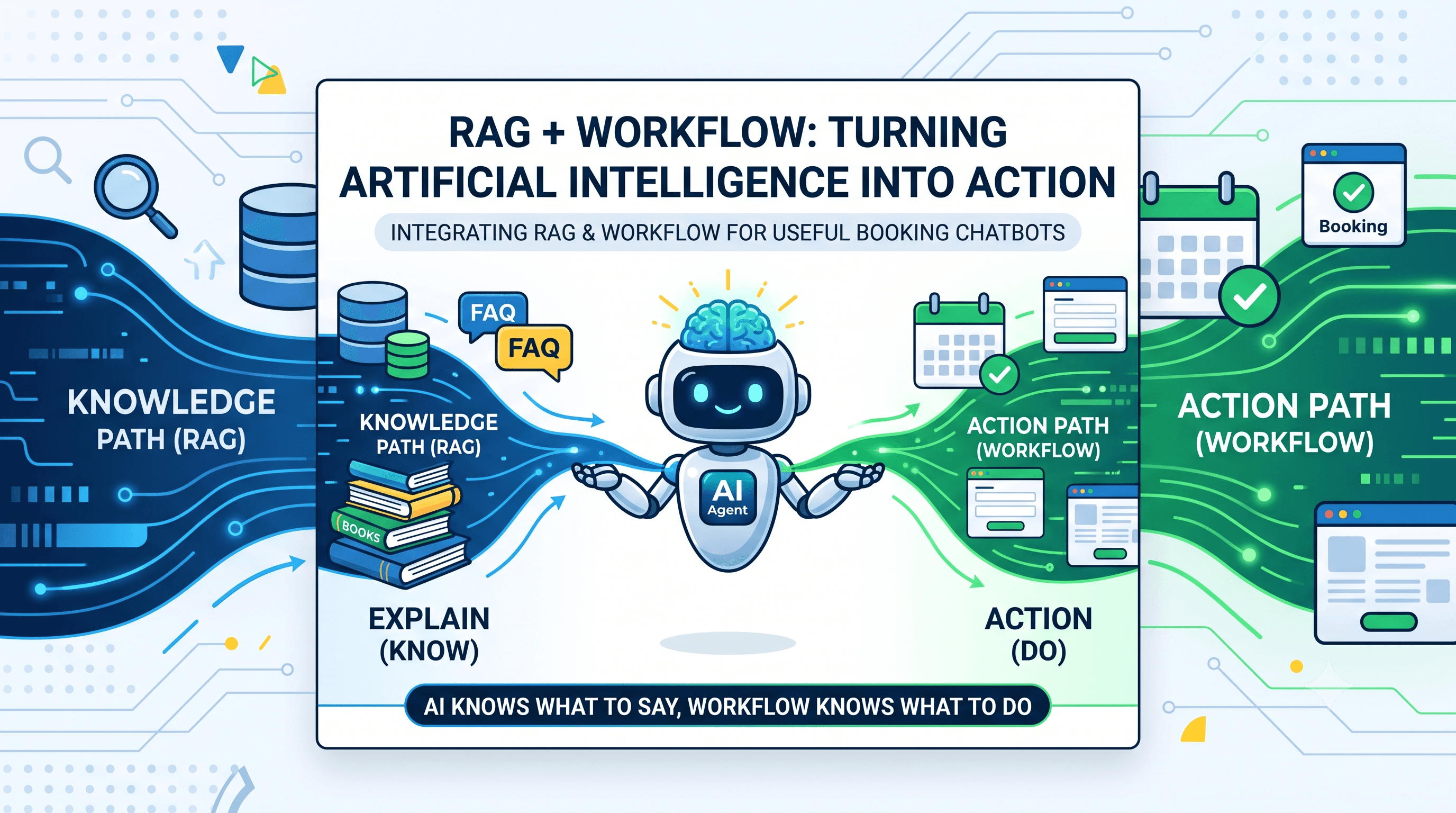
The core idea: separate knowing from doing
A useful AI assistant usually carries two different responsibilities. The first is explaining something from trustworthy knowledge. The second is helping the user complete a concrete task.
- Knowledge path: find the relevant FAQ or document, ground the model in that context, and provide a useful answer.
- Action path: recognize booking intent, collect the necessary information, prepare a draft, and return the decision to the user.
RAG helps the AI know what to say; a workflow helps the product know what to do.
Why FAQ search is still the right starting point
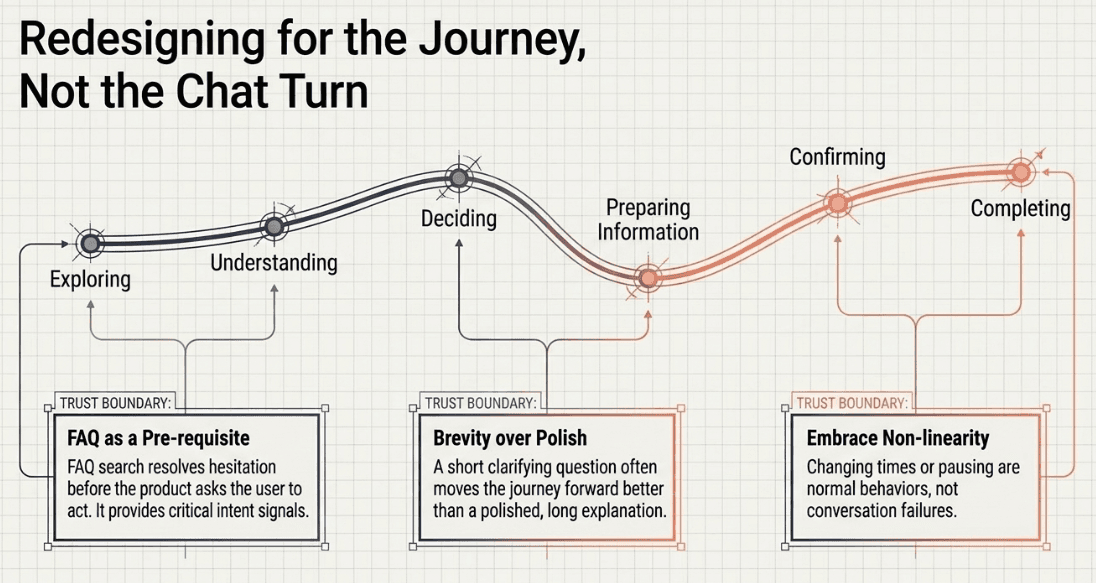
A booking rarely begins with a form. It usually begins with uncertainty: is this service suitable, how does pricing work, what should I prepare, or when can I visit? FAQ search resolves that hesitation before the product asks the user to act.
RAG therefore should not be treated as an isolated feature. It is a shared knowledge layer that supports both the answer and the next decision in the journey.
- It closes information gaps before the user acts.
- It provides intent signals: someone asking about available times has a different need from someone seeking general knowledge.
- It creates a natural bridge from “I understand” to “I want to book.”
Change the unit of design: from chat turns to a journey
Viewed one message at a time, a chatbot appears to answer a series of unrelated questions. Viewed as a journey, the user is moving through states: exploring, understanding, deciding, preparing information, confirming, and completing.
That perspective changes the design. A polished answer does not necessarily move the journey forward. A short clarifying question may create more value than a long explanation.
The journey does not have to be linear. A user may ask another question, change a time, or stop. A good product treats those choices as normal behavior rather than conversation failures.
Trust comes from boundaries
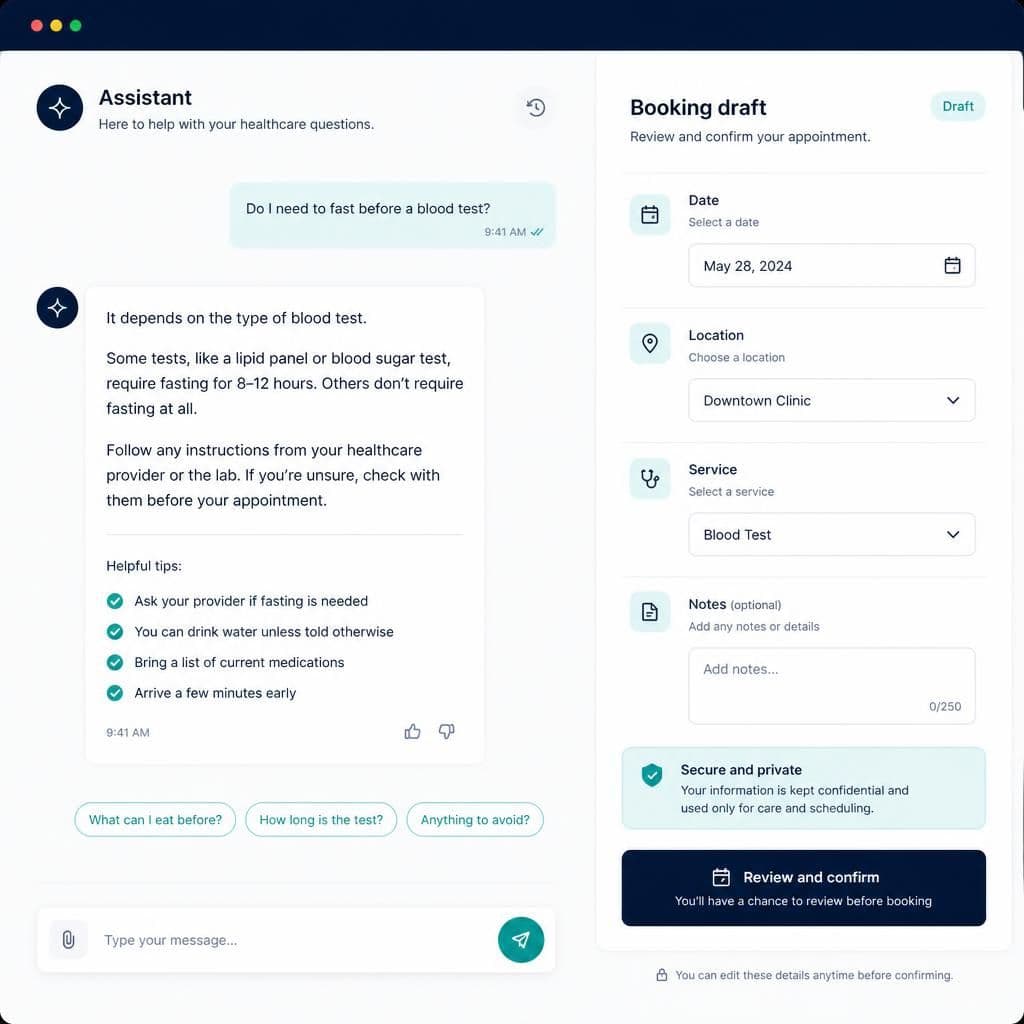
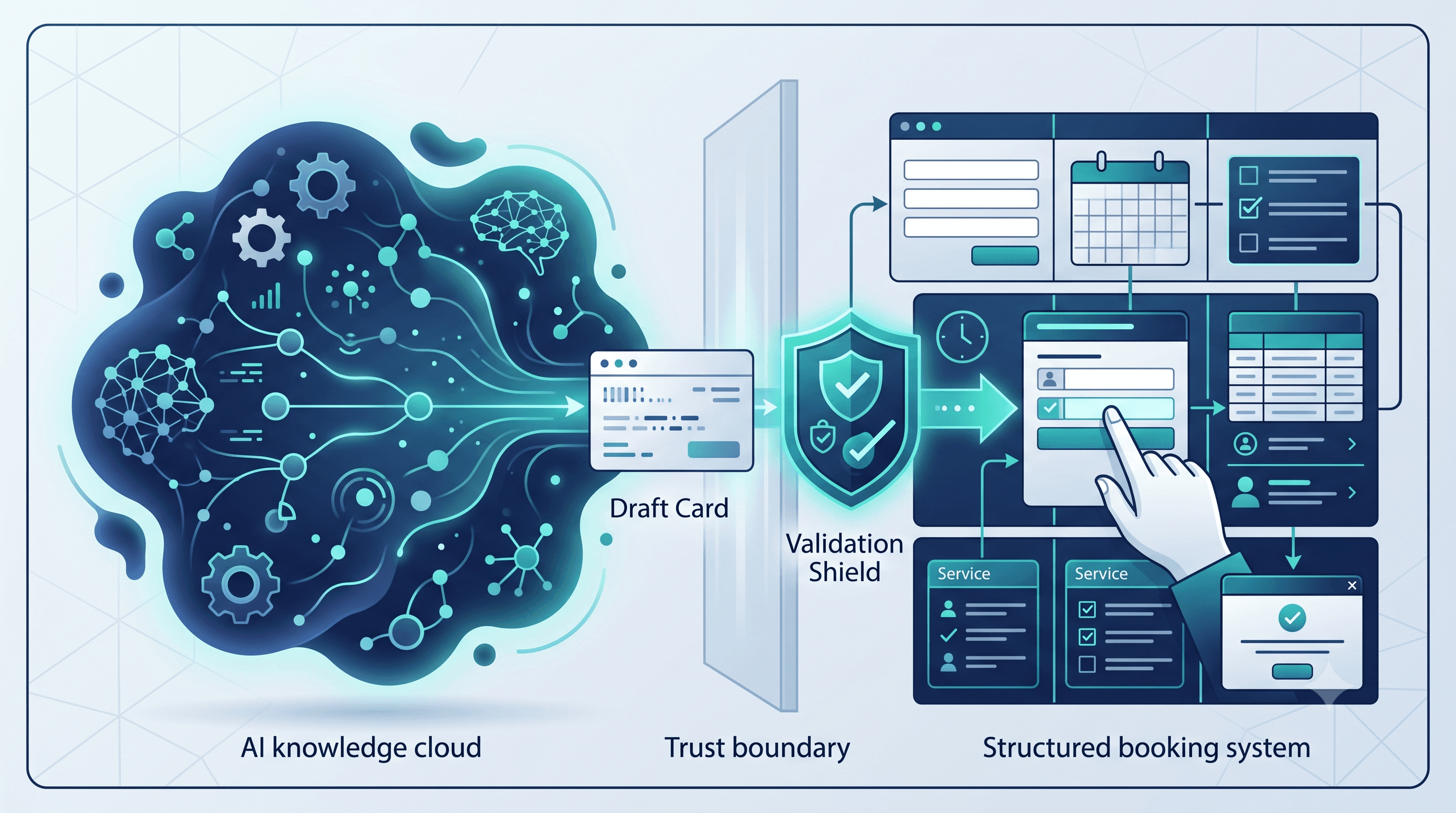
When AI only answers, a mistake usually produces a poor response. When AI can book, a mistake can create incorrect data or an unwanted commitment. The value of an agent therefore does not come from giving the model full control. It comes from placing the right boundary between flexible reasoning and reliable decisions.
- AI may interpret natural language, suggest a next step, and prepare a draft.
- The product must own rules, permissions, validity, and persistent writes.
- The user must see what will happen and explicitly confirm an action with a side effect.
This boundary does not make the agent less intelligent. It makes that intelligence trustworthy enough to become part of a real product.
Three trade-offs worth discussing
A seamless conversation or visible control?
A fully automatic experience may feel smooth, but it can blur the line between a suggestion and a real action. For booking, an explicit confirmation point is usually worth more than the few seconds it costs.
A smart model or predictable state?
A model can remember conversational context, but the journey should not depend entirely on conversational memory. The product needs a clear view of the current booking state and the next choice the user can understand.
Fast conversion or durable trust?
Pushing every user toward booking may improve a short-term metric, but an invitation at the wrong time makes the assistant feel self-serving. The action path should open when intent is clear or when the user explicitly asks for it.
Measure the whole journey
Retrieval accuracy tells us how the knowledge path performs. A product that combines FAQ and booking also needs signals about the journey.
- Did the answer help the user continue instead of repeating the same question?
- How many sessions moved naturally from exploration to a booking draft?
- How much information did users need to correct before confirmation?
- How many bookings were confirmed, cancelled, or abandoned because the experience was unclear?
These measures connect AI quality to product value without confusing a fluent answer with a successful outcome.
Conclusion: the agent is a bridge, not the center of the system
The idea I want to keep from this problem is simple: FAQ search and booking are not two separate chatbots. They are two parts of one journey—one helps a user understand, and the other helps them act.
RAG provides the knowledge foundation. The agent recognizes when a conversation should become a workflow. Product guardrails and user confirmation turn a proposal into a safe outcome. When every part has a clear responsibility, AI does more than answer well; it becomes a useful part of the product.